OGRA's Latest Regulatory Updates for Oil Marketing Companies
The Oil and Gas Regulatory Authority (OGRA) has introduced new compliance frameworks for licensed Oil Marketing Companies (OMCs) operating in Pakistan. These updates cover licensing renewal procedures, price mechanism adjustments, and enhanced safety protocols. Al Noor N3 maintains full compliance with all OGRA regulations, ensuring transparent operations and reliable service delivery across our distribution network that spans from Gwadar to Machike.
These recent amendments are designed to increase transparency in the pricing mechanism and ensure that the end consumer benefits from global oil price fluctuations efficiently. For Oil Marketing Companies, this means adopting more agile pricing strategies and robust reporting mechanisms to the regulatory body. As a company established in 2016 with OGRA's sanction, Al Noor N3 has built its operations around regulatory compliance from day one.
Understanding OGRA's Role in Pakistan's Petroleum Sector
OGRA was created to regulate and oversee Pakistan's oil and gas sectors, ensuring fair competition, protecting consumer interests, and maintaining quality standards. For oil marketing companies like Al Noor N3, OGRA sets the framework within which we operate from the fuel quality specifications we must meet to the pricing formulas that determine retail prices at our pumps.
The regulatory authority issues licenses only after rigorous evaluation of an applicant's technical capacity, financial stability, and infrastructure adequacy. When Al Noor N3 applied for our OMC license, we had to demonstrate that we possessed the necessary storage facilities, quality testing capabilities, and management expertise. This stringent process ensures that only serious players committed to the highest standards enter the market.
Compliance is not a burden, but a pathway to trust and sustainable business growth.
Recent Regulatory Framework Enhancements
OGRA's latest updates focus on three key areas: pricing transparency, safety compliance, and digital transformation. The new pricing mechanism requires OMCs to submit detailed cost breakdowns bi weekly, allowing OGRA to verify that retail prices accurately reflect international oil price movements, rupee-dollar exchange rates, and transportation costs. This protects consumers from arbitrary price manipulation while ensuring OMCs can operate sustainably.
For Al Noor N3, these pricing updates have required investment in sophisticated accounting and reporting systems. Our finance team now maintains real time linkages with OGRA's digital platforms, submitting pricing data and cost justifications electronically. This streamlined process has actually improved our operational efficiency, allowing us to focus more on serving customers rather than paperwork.
Enhanced Safety Protocols
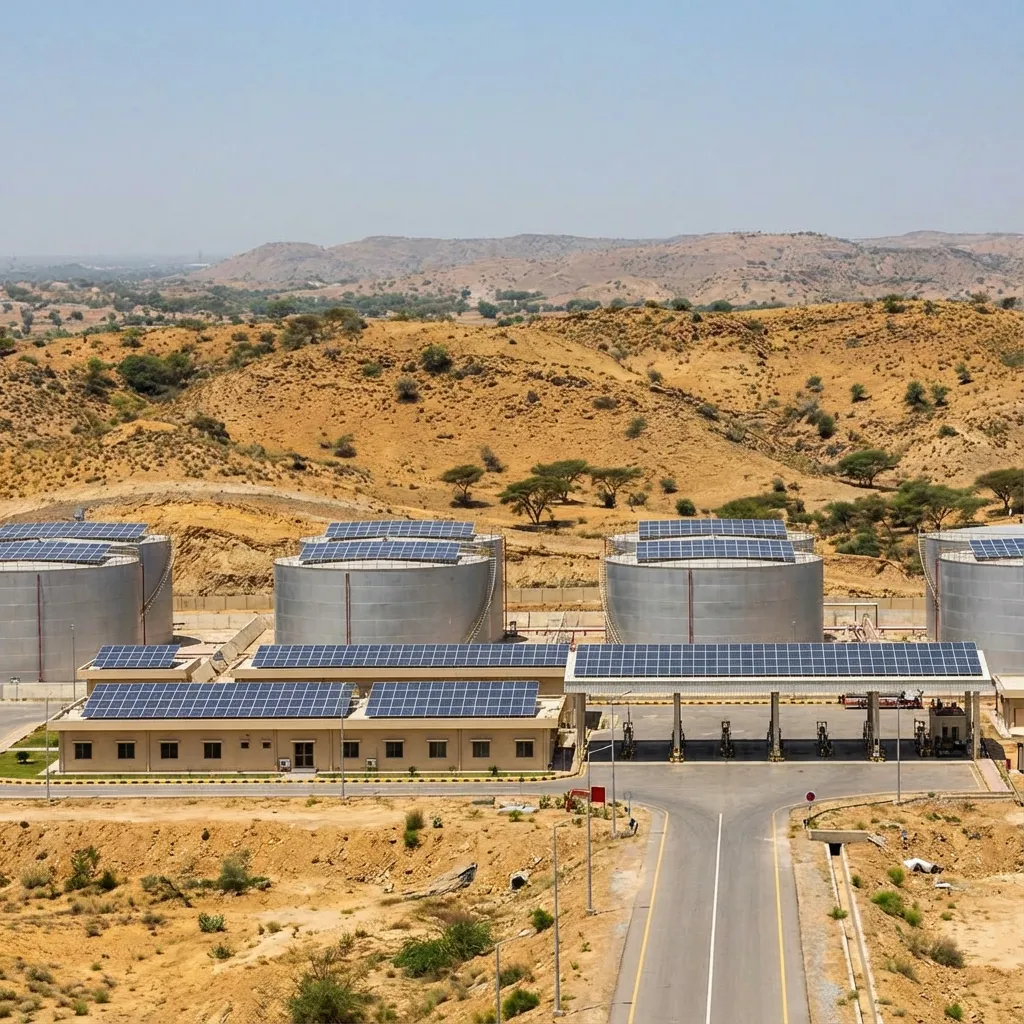
Furthermore, the new safety protocols mandate stricter inspections of storage depots and transport fleets. Al Noor N3 has proactively upgraded its safety management systems to exceed these new requirements. At our Keamari and Port Qasim terminals, we've installed advanced fire suppression systems, leak detection sensors, and automated shutdown mechanisms that respond instantly to any anomaly.
We believe that a safe environment is the foundation of a reliable energy supply chain. Our depots at Daulatpur, Sahiwal, Mehmood Kot, and Shikarpur all undergo monthly safety audits conducted by both our internal teams and third party inspectors. OGRA conducts surprise inspections to verify compliance, and we welcome this oversight as it ensures industry-wide adherence to safety standards.
Digital Licensing and Renewal Procedures
We are also streamlining our licensing renewal procedures through digital channels, as encouraged by the new framework. OGRA has developed an online portal where OMCs can submit renewal applications, track processing status, and receive approvals electronically. This ensures that our administrative operations are as efficient as our fuel delivery, minimizing downtime and maximizing focus on serving our customers.
Al Noor N3's OMC license requires periodic renewal, and the new digital system has reduced what used to be a months-long bureaucratic process to just weeks. We maintain detailed records of our operations fuel import volumes, storage capacity utilization, retail outlet performance, and quality test results all of which must be submitted during renewal. Our commitment to meticulous record-keeping ensures smooth renewals and demonstrates our operational excellence.
Quality Standards and Product Testing
OGRA's regulations also mandate specific quality standards for petroleum products sold in Pakistan. With the transition to Euro-5 specifications, these standards have become even more stringent. OMCs must conduct regular product testing at OGRA-approved laboratories and maintain detailed quality control records.
At Al Noor N3, we've invested in establishing our own OGRA certified testing laboratory at our Keamari facility. This allows us to conduct preliminary quality checks immediately upon fuel receipt, rather than waiting for third-party lab results. Of course, we still submit samples to HDIP (Hydrocarbon Development Institute of Pakistan) for independent verification, but our in-house capability speeds up our operations while maintaining compliance.
The Environmental Compliance Dimension
Recent OGRA guidelines have also emphasized environmental responsibilities. OMCs must now submit annual environmental impact assessments covering emissions from storage terminals, transportation fleet efficiency, and measures taken to prevent soil and water contamination from fuel handling operations.
Al Noor N3 has embraced this environmental focus. Our terminals feature oil water separators, containment systems for preventing spillage, and vapour recovery units that capture fuel vapours during loading operations. These investments not only ensure regulatory compliance but also demonstrate our commitment to environmental stewardship in the communities we serve.
Looking Forward: Regulatory Evolution
OGRA continues to evolve its regulatory framework in response to changing market dynamics, technological advances, and international best practices. We expect future regulations to focus on renewable energy integration, carbon emissions tracking, and enhanced consumer protection mechanisms.
Al Noor N3 is preparing for this future by investing not just in compliance systems, but in building a culture where regulatory adherence is seen not as a constraint but as an opportunity to demonstrate our professionalism and commitment to excellence. Our message to stakeholders is clear: regulatory compliance is the foundation upon which we build trust. Every regulation we follow, every standard we exceed, and every audit we pass reinforces the Al Noor N3 promise to power Pakistan's progress with integrity, transparency, and unwavering quality.